Tsukumogami — How Objects Become Spirits in Japanese Mythology
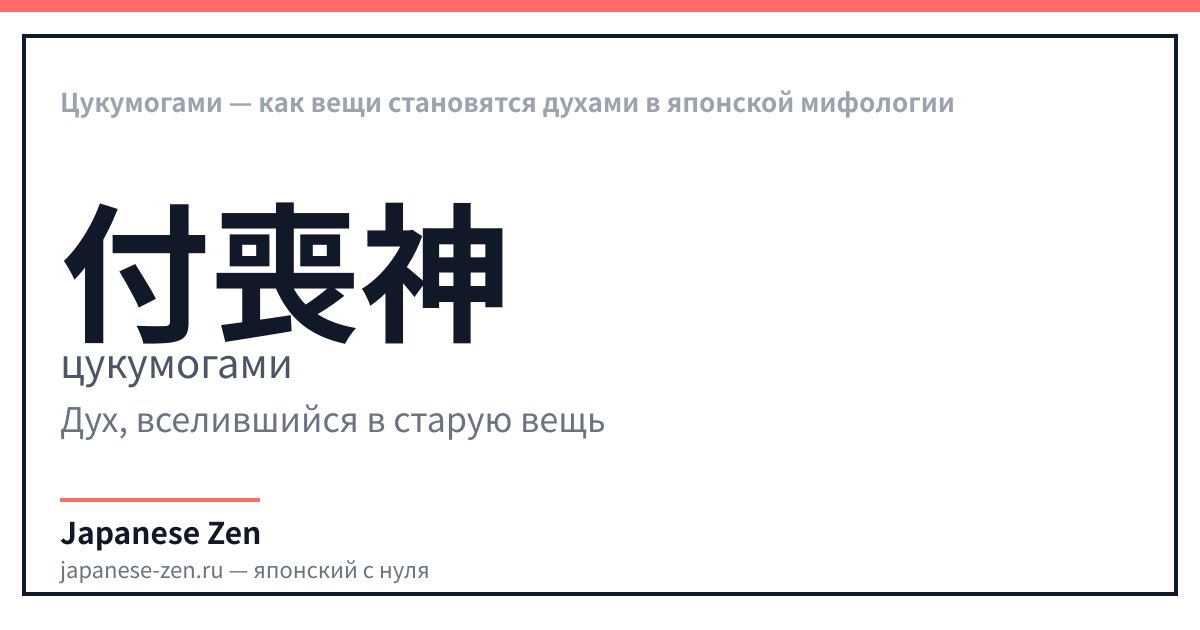
Tsukumogami (付喪神) are objects that come to life after a hundred years of service: umbrellas, teapots, sandals, anything from household utensils. The name goes back to the word "tsukumo" — a poetic way of saying "one short of a hundred," as in an old tanka about the gray hair of a hundred-year-old woman. The idea was alive as early as the Muromachi period: the scroll "Tsukumogami Emaki" tells how objects thrown out during New Year cleaning take revenge on people, and then themselves become Buddhist monks.
Throwing away an old object without proper respect is, according to Japanese beliefs, a risky habit: it may well take offense.
A Hundred Years Is Not a Metaphor but a Specific Term of Service
A tsukumogami is a household item that has served for about a hundred years and, through long use, has acquired its own soul and character. Almost anything can be a candidate: an umbrella, a teapot, sandals, a musical instrument, a mortar. Visually, it is most often the same object with added eyes, arms, or legs, rather than a transformation into something completely different.
- The kasa-obake umbrella is the most famous individual character of this class: one eye, a long tongue, a leg instead of a handle.
- Teapots, sandals, mortars, musical instruments — in old scrolls, literally any household utensil comes to life.
- Its habits are more mischievous than villainous: to frighten by sudden appearance, not to hunt people.
- Age is not a guarantee: an old object may serve for three hundred years and still remain just an old object.
Does a Tsukumogami Necessarily Take Revenge on Its Former Owners?
Not necessarily — much depends on how the object was treated. Respectful use, according to belief, is more likely to turn the item into a harmless or even friendly spirit; carelessness and disposal without proper regard — into an embittered one. The motive is closer to resentment than to innate evil.
"Tsukumo" Means "One Short of a Hundred"
| Japanese | Reading | Translation |
|---|---|---|
| 付喪神 | tsukumogami · tsukumogami | A spirit that has taken up residence in an old object |
| 百年 | hyakunen · hyakunen | A hundred years — the traditional term before transformation |
| 道具 | dōgu · dōgu | Tool, utensil |
| 化ける | bakeru · bakeru | To transform, to take another form |
| 針供養 | hari-kuyō · hari-kuyō | A memorial rite for broken sewing needles |
What Does an Old Poem About Gray Hair Have to Do with It?
The scroll "Tsukumogami Emaki" itself explains: "a hundred years minus one" — that is, ninety-nine. The number 九十九 is read with the same word "tsukumo" and refers to a tanka from the classical anthology "Ise Monogatari," where it is used to describe the gray hair of a hundred-year-old woman. The wordplay turns an everyday number into an image of extreme, almost century-long old age.
付 — значение: to attach, to give, to join — онъёми: フ — кунъёми: つ.ける、-つ.ける、-づ.ける、つ.け、つ.け-、-つ.け、-づ.け、-づけ、つ.く、-づ.く、つ.き、-つ.き、-つき、-づ.き、-づき — 5 штрих(ов). 付 — "to attach, to give": in 付喪神 it conveys the very essence of the transformation — the spirit seems to attach itself, to grow onto the object after long service.
Write 付 along the guides and study the stroke order.
New Year Cleaning, After Which Objects Take Revenge
The plot of the scroll "Tsukumogami Emaki," created in the Muromachi period, begins with susuharai — the ritual cleaning before the New Year: owners throw out old utensils without due gratitude for their service. The discarded objects come to life in revenge, unite, and attack people.
How the Story Ends in the Scroll
The ending is not bloody: a Buddhist ritual pacifies the rebellious objects, after which they themselves take monastic vows, go into the mountains for practice, and ultimately attain enlightenment. Vengefulness turns out to be only the first, not the only, act of the story.
Hari-kuyō — Where This Is Still Done Today
The logic that "an object deserves a respectful farewell" is alive today, just without talking directly about animated utensils. Hari-kuyō, the "memorial for needles," is held on February 8 across the country and on December 8 in Kyoto: broken and dulled sewing needles accumulated over the year are brought to a temple rather than thrown away haphazardly, and on this day it is customary to rest from sewing.
Where Tsukumogami Are Encountered Today
- The game Yo-kai Watch is populated with animated objects in the spirit of tsukumogami — from furniture to household appliances.
- The folk tale "Bumbuku Chagama," about a teapot that turns out to be a shapeshifting badger, is a different kind of story: there an animal disguises itself as an object, rather than the object itself gaining a soul.
- Karakasa, the one-eyed umbrella monster, remains the most recognizable individual character of this class.
FAQ
- What is a tsukumogami?
- A household item that has lived for about a hundred years and, through long service, has acquired its own soul and character. An umbrella, a teapot, sandals — almost any household utensil can be a candidate.
- How does an object become a tsukumogami?
- According to belief, it requires about a hundred years of service. Respectful treatment makes the future spirit more likely harmless; carelessness and disposal without gratitude make it more likely embittered.
- Where does the word "tsukumogami" come from?
- "Tsukumo" refers to the number 九十九, "ninety-nine" — "a hundred minus one year," as in an old tanka about the gray hair of a hundred-year-old woman from the anthology "Ise Monogatari."
- How is 付喪神 written in kanji?
- つくもがみ: 付 "to attach" — the same root as in the name itself, and 神 (kami) means "spirit, deity." The character 喪 in the middle of the word is here more phonetic, for the sound "tsukumo," than semantic.
- Is it true that throwing away old objects is dangerous?
- According to belief, yes, if done without gratitude. A living trace of this logic is the hari-kuyō rite: broken sewing needles are brought to a temple for memorial, not simply thrown away.
- Is karakasa a tsukumogami?
- Yes, the most famous individual representative of this class: an old umbrella that has lived to a hundred years and acquired a single eye and a leg instead of a handle.
Sources
Updated: 2026-09-09