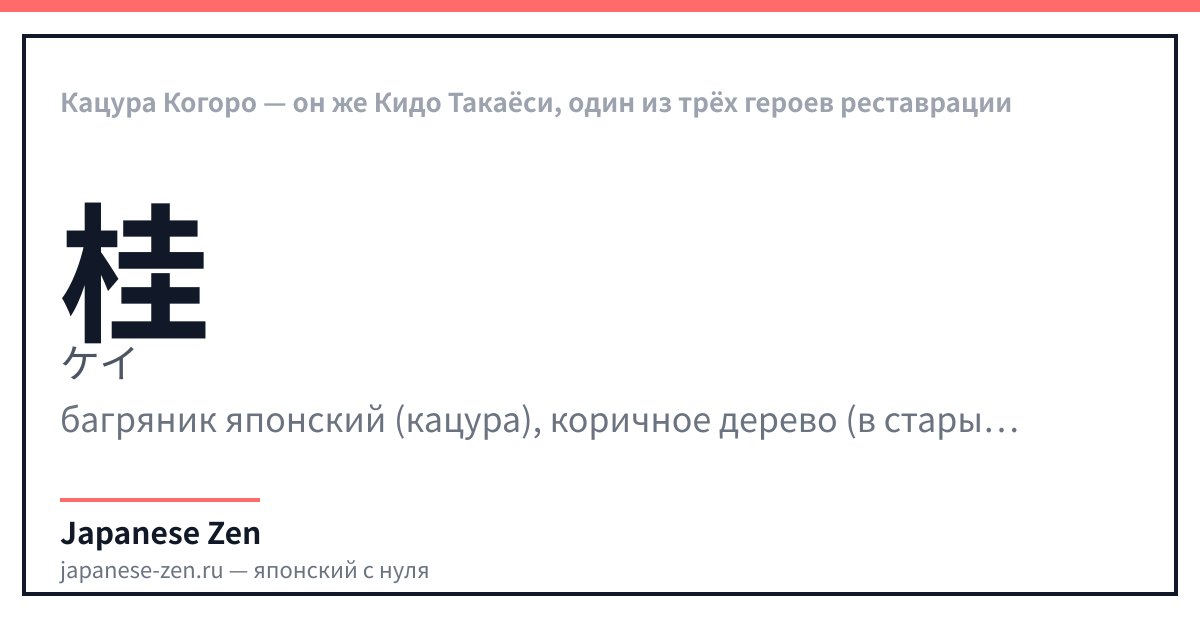
Katsura Kogoro — also known as Kido Takayoshi, one of the three heroes of the Restoration
Katsura Kogoro (桂小五郎, 1833–1877) was a samurai of the Choshu domain, a skilled swordsman of the Shinto Munen-ryu school, and a leader of the anti-shogunate faction in his domain. In 1866, Katsura Kogoro, representing Choshu, concluded an alliance with Satsuma. In Meiji history he is known under the name Kido Takayoshi (木戸孝允) — as one of the "three great heroes of the Restoration" alongside Saigo Takamori and Okubo Toshimichi.
A reader who encounters both "Katsura Kogoro" and "Kido Takayoshi" may wonder: are they really the same person? Let's explore how a skilled swordsman of the Shinto Munen-ryu school repeatedly evaded manhunts in the 1860s — and why the nickname "Kogoro the Runaway" was given to him not by his contemporaries but by the novelist Shiba Ryotaro. And along the way, we'll look at how names were changed in 19th-century Japan and what the geisha Ikumatsu, who hid him from the shogunate's spies, had to do with it.
One man under two names: warrior and politician
Katsura Kogoro was born in 1833 in Hagi, into the family of a doctor of the Choshu domain, and from a young age studied swordsmanship at the Renpeikan dojo in Edo, of the Shinto Munen-ryu school, where within a year he became a senior student (塾頭). Despite his reputation as a fighter, in the turbulent 1860s he became famous not for victories with the sword but for his ability to escape in time. He repeatedly survived manhunts against supporters of overthrowing the shogunate — hence the nickname "Nige no Kogoro" (逃げの小五郎, "Kogoro the Runaway"), which, however, was coined in the 20th century by the writer Shiba Ryotaro. In 1866, Lord Mori Takachika granted him a new surname — Kido — and in Meiji history he is known as Kido Takayoshi.
| Year | Event |
|---|---|
| 1833 | born in Hagi, Choshu domain |
| before 1858 | studies at the Renpeikan dojo, Shinto Munen-ryu school |
| 1864 | escapes arrest after the Ikedaya incident and the fighting at the Hamaguri Gate |
| March 7, 1866 | concludes the Satsuma-Choshu alliance on behalf of Choshu |
| 1866 | receives the surname Kido from Lord Mori Takachika |
| 1871 | together with Okubo and Saigo carries out the abolition of the domains |
| May 26, 1877 | dies in Kyoto during the Satsuma Rebellion |
The geisha Ikumatsu, who hid the fugitive
Kogoro was helped to hide by a geisha named Ikumatsu — she sheltered him during manhunts and passed on news of the situation in Kyoto. After the Meiji Restoration, she became his wife and took the name Kido Matsuko. Sources give different years for their official marriage, but the acquaintance itself dates to the most dangerous period of his life, the early 1860s.
How samurai changed names: the path from Kogoro to Takayoshi
桂 — значение: katsura (Japanese Judas tree), cinnamon tree (in old dictionaries) — онъёми: ケイ — кунъёми: かつら — 10 штрих(ов). 桂 — katsura (Japanese Judas tree), a tree with heart-shaped leaves that turn yellow and give off a sweet fragrance in autumn. This is the first character of the surname by which he was known until 1866.
幼名, 通称, 諱 — three names of one samurai
Before the Meiji era, a samurai usually had several names: a childhood name 幼名 (yomyo), a common name 通称 (tsusho) by which he was addressed, and a formal name 諱 (imina) that was almost never spoken aloud. "Kogoro" was his tsusho, and "Takayoshi" (孝允) was the imina he received upon entering the Katsura family. In 1866, Lord Mori Takachika granted him the surname Kido, and from 1869 he began openly using his formal name — thus Kido Takayoshi came to be.
| Japanese | Reading | Translation |
|---|---|---|
| 桂小五郎 | Katsura Kogorō · Katsura Kogorō | Surname and common name — this is what he was called until 1866 |
| 木戸孝允 | Kido Takayoshi · Kido Takayoshi | Surname Kido and formal name Takayoshi — this is how he is known in the Meiji era |
| 逃げの小五郎 | Nige no Kogorō · Nige no Kogorō | "Kogoro the Runaway" — a nickname from Shiba Ryotaro's work |
| 維新の三傑 | Ishin no Sanketsu · Ishin no Sanketsu | "Three great heroes of the Restoration" — together with Saigo and Okubo |
| 桂 | katsura · katsura | "Katsura" — the tree from the surname Katsura |
Listen to how 桂 sounds — the app will evaluate your pronunciation.
Coward or tactician: why a skilled swordsman became famous for running away
The contradiction is striking: a senior student of one of the three great dojos of Edo — and yet a politician famous precisely for his ability to avoid battle. Sources do not say that Kogoro was a coward. In the 1860s, an open clash with shogunate forces meant certain death, not victory. His value to Choshu was in staying alive and continuing negotiations, not dying with a sword in hand.
- Myth: "Katsura Kogoro" and "Kido Takayoshi" are different historical figures who are sometimes confused in texts. They are the same person: the change of name was not accompanied by a change of identity or biography.
- Myth: the nickname "Kogoro the Runaway" was given to him by his contemporaries. In fact, it comes from Shiba Ryotaro's work "Nige no Kogoro"; in documents of the Bakumatsu era this nickname does not appear.
- In "Gintama", the parody rebel leader named Katsura Kotaro (桂小太郎) is a caricature with a similar name, but a separate comedic character, not a biopic of the historical Katsura Kogoro.
FAQ
- Are Katsura Kogoro and Kido Takayoshi the same person?
- Yes. "Katsura Kogoro" is the surname and common name of a samurai from Choshu. In 1866, Lord Mori granted him the surname Kido, and in the Meiji era he entered history as Kido Takayoshi — one of the "three great heroes of the Restoration." Changing names was a common practice for samurai, not a change of identity.
- What did Katsura Kogoro become famous for in the Bakumatsu period?
- A samurai of the Choshu domain, a master of the Shinto Munen-ryu school of swordsmanship, and a political figure who in 1866 concluded the Satsuma-Choshu alliance on behalf of his domain. In the Meiji era he is known as Kido Takayoshi; he died in 1877 in Kyoto.
- Why was Katsura Kogoro nicknamed "Kogoro the Runaway"?
- His contemporaries did not call him that: the nickname "Nige no Kogoro" (逃げの小五郎) comes from Shiba Ryotaro's work of the same name. But it has a real basis — in the 1860s Katsura repeatedly evaded manhunts, including after the Ikedaya incident and the fighting at the Hamaguri Gate in 1864.
- How are both names written — Katsura Kogoro and Kido Takayoshi?
- Before 1866 — 桂小五郎, where 桂 (katsura) means "Japanese Judas tree," the surname of the family. In the Meiji era — 木戸孝允 (Kido Takayoshi), where 孝允 is his formal name. Both variants belong to the same person at different periods of his life.
- Who was Ikumatsu to Katsura Kogoro?
- A geisha who, during his most dangerous years in the early and mid-1860s, sheltered him during manhunts by shogunate spies and passed on news of the situation in Kyoto. After the Meiji Restoration, she officially became his wife under the name Kido Matsuko.
- When did Kido Takayoshi (Katsura Kogoro) die?
- On May 26, 1877, in Kyoto, during the Satsuma Rebellion — but not in battle, from illness. He was one of the "three great heroes of the Restoration" and the first of them to pass away: Saigo Takamori died later that same year, 1877, and Okubo Toshimichi in 1878.
Sources
Updated: 2026-09-13