Boshin War — the Civil War of 1868–1869: sides, course, and outcome
The Boshin War was a civil war of 1868–1869 between supporters of the emperor (Satsuma, Choshu, Tosa) and supporters of the Tokugawa shogunate, including the Shinsengumi and the Aizu domain. It began on January 27, 1868, with the Battle of Toba-Fushimi and ended on June 27, 1869, with the surrender of Goryokaku fortress in Hakodate, where the rebels' proclaimed Republic of Ezo made its stand. The imperial side won.
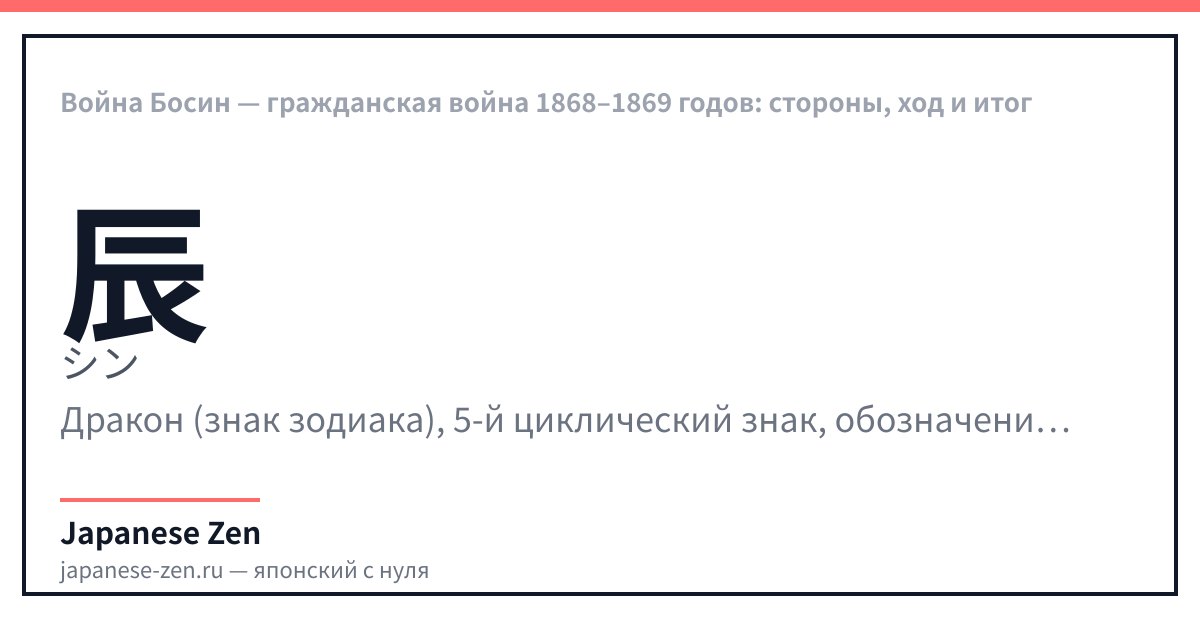
The war took its name not from a place of battle but from the year in the East Asian calendar — 戊辰, 'Earth-Dragon.' Over a year and a half of fighting, the shogun's supporters lost Kyoto, Edo, northern Honshu, and finally Hokkaido — and with them, any chance of restoring Tokugawa power. We break down how the war unfolded, who fought on which side, and what French military advisers had to do with it.
How the Boshin War unfolded
The Boshin War was an armed conflict of 1868–1869 between the new imperial government and forces loyal to the Tokugawa shogunate. It began on January 27, 1868, with the Battle of Toba-Fushimi near Kyoto, where imperial troops defeated the shogun's army despite the enemy's numerical superiority. Events then moved swiftly: Edo surrendered without a fight as early as May, resistance in the north was crushed by autumn, and the last stronghold of the shogunate's supporters on Hokkaido capitulated on June 27, 1869.
- January 27–31, 1868 — Battle of Toba-Fushimi: the shogunate army is routed despite its numerical advantage (about 15,000 against 5,000).
- May 3, 1868 — negotiations between Saigo Takamori and Katsu Kaishu end in the bloodless surrender of Edo Castle.
- May 17, 1868 — Shinsengumi commander Kondo Isami is executed; on July 4, the Shogitai unit is defeated at Ueno, the last pocket of resistance in Edo.
- May–November 1868 — fighting against the Northern Alliance of domains (奥羽越列藩同盟); on November 6, after a month-long siege, Aizu-Wakamatsu Castle surrenders.
- October 1868 – June 1869 — the remnants of the shogunate forces under Enomoto Takeaki fortify themselves in Hakodate and proclaim the Republic of Ezo.
- June 20, 1869 — Hijikata Toshizo dies at Hakodate; on June 27, Goryokaku capitulates, and the war ends.
Who refused to recognize the restoration decree
The formal trigger was the restoration decree of January 3, 1868: supporters of Shogun Tokugawa Yoshinobu refused to recognize it as legitimate and massed troops near Kyoto. The Shinsengumi — a police unit that had spent years fighting imperial supporters in Kyoto — at this stage was no longer fighting individuals but the regular armies of Satsuma and Choshu.
Who fought in the Boshin War
| Side | Who led | How it ended |
|---|---|---|
| Imperial army (Satsuma, Choshu, Tosa) | Formally Prince Arisugawa Taruhito, in practice Saigo Takamori and the commanders of Satsuma and Choshu | Victory; surrender of Edo, the northern domains, and Hakodate |
| Tokugawa shogunate | Tokugawa Yoshinobu, then military commanders without a single leader | Defeat at Toba-Fushimi, surrender of Edo in May 1868 |
| Shinsengumi | Kondo Isami, after his execution Hijikata Toshizo | Fighting at Toba-Fushimi, then in the north and at Hakodate; Hijikata died in 1869 |
| Northern Alliance and Aizu | Matsudaira Katamori | The defense of Aizu-Wakamatsu fell on November 6, 1868 |
| Republic of Ezo | Enomoto Takeaki, military adviser — Frenchman Jules Brunet | Capitulation of Goryokaku on June 27, 1869, end of the war |
Estimates of the total death toll vary — from 8,000 to 13,500 on both sides; Aizu suffered the heaviest losses. The discrepancy is explained by the fact that some counts include only those killed in battle, while others include those who died of wounds and disease.
Where the name 戊辰戦争 comes from
戦争 is read せんそう (sensō, 'war'), while 戊辰 denotes the year 1868 in the 60-year calendar cycle. Each year in it receives a pair from the 'ten stems' and 'twelve branches': 戊 is the 'elder brother of Earth,' 辰 is the 'Dragon,' the fifth sign of the zodiacal cycle. 'Boshin' is the Chinese (on) reading of this pair of signs; the Japanese reading is tsuchinoe-tatsu. It is the name of a year, not of a place or a person.
辰 — значение: Dragon (zodiac sign), 5th cyclical sign, year designation — онъёми: シン、ジン — кунъёми: たつ — 7 штрих(ов). 辰 — 'Dragon,' the fifth sign of the twelve-year zodiacal cycle: 7 strokes. Paired with 戊 ('elder brother of Earth') it gives 戊辰 — the designation of 1868, hence the name of the war.
| Japanese | Reading | Translation |
|---|---|---|
| 戊辰戦争 | Boshin Sensō · Boshin Sensō | Full Japanese name of the war |
| 鳥羽・伏見の戦い | Toba-Fushimi no Tatakai · Toba-Fushimi no Tatakai | Battle of Toba-Fushimi — the first battle of the war |
| 五稜郭 | Goryōkaku · Goryōkaku | Star-shaped fortress in Hakodate, the last stronghold of the shogunate forces |
| 干支 | eto · eto | The 60-year calendar cycle of 'stems' and 'branches' |
| 戦う | tatakau · tatakau | To fight, to do battle |
How the Japanese still name events by the cycle
The practice of designating events by a 'stem-branch' pair outlived the 19th century. The rebellion of 672 is called 壬申の乱 (Jinshin no Ran) — 'the rebellion of the Water-Monkey year.' And the baseball stadium 甲子園 (Koshien) in Nishinomiya, between Osaka and Kobe, is so named because it opened in 1924 — the year of the Wood-Rat (甲子), with which the cycle begins anew. The year of the Boshin War, 1868, was in the same cycle the year of the Earth-Dragon.
Listen and repeat the name of the war and military terms of the era.
The Boshin War on screen
- 'Hakuoki' (薄桜鬼) — an Otomate visual novel (2008) and anime about the Shinsengumi with fantasy demons. The second season, 'Hekketsuroku' (2010), follows the unit after Toba-Fushimi through Aizu to Hakodate.
- 'Yae no Sakura' (八重の桜, 2013) — an NHK taiga drama about Niijima Yae, who defended Aizu with a rifle in hand in 1868 — in the same siege in which Nakano Takeko of the women's unit died.
- 'The Last Samurai' (2003) — the model for Tom Cruise's hero is said to be the Frenchman Jules Brunet, who fought for the shogunate and the Republic of Ezo. But the plot is fictional and moved to 1876–1877, closer to the Satsuma Rebellion.
What's true in films and games, and what isn't
Jules Brunet is a real figure: a French officer who trained the shogun's artillerymen, refused to leave Japan after the defeat, and fought in the Boshin War on the side of the Republic of Ezo. But 'The Last Samurai' does not retell the Boshin War: the film assembles a fictional plot from elements of two different conflicts that occurred nine years apart and shifts the action to 1876–1877.
FAQ
- What is the Boshin War?
- The Boshin War (戊辰戦争) was a civil war of 1868–1869 between supporters of the emperor and supporters of the Tokugawa shogunate. It began on January 27, 1868, with the Battle of Toba-Fushimi and ended on June 27, 1869, with the surrender of Goryokaku fortress in Hakodate. The imperial side won.
- When was the Boshin War fought?
- The Boshin War lasted 17 months — from January 27, 1868, the day of the Battle of Toba-Fushimi, to June 27, 1869, when Goryokaku fortress in Hakodate capitulated. It is named after the year 1868 — the 'year of the Earth-Dragon' (戊辰) in the East Asian calendar cycle.
- Who fought in the Boshin War?
- On one side was the imperial army of Satsuma, Choshu, and Tosa. On the other were supporters of the Tokugawa shogunate: the Shinsengumi, the Northern Alliance of domains together with Aizu, and in the final stage the Republic of Ezo on Hokkaido under Enomoto Takeaki, who commanded the shogunate's fleet. The French military adviser Jules Brunet also fought on the shogunate's side.
- How did the Boshin War end?
- With victory for the imperial side and the end of more than 250 years of rule by the Tokugawa shoguns. The last stronghold of resistance — the Republic of Ezo in Hakodate — capitulated on June 27, 1869. Estimates of the death toll vary, from 8,000 to 13,500 on both sides.
- Why is the war called 'Boshin'?
- The name comes not from a place but from the year: 1868 in the 60-year Japanese calendar cycle was the year of the 'Earth-Dragon' (戊辰, tsuchinoe tatsu). By the same principle the Japanese call, for example, the rebellion of 672 壬申の乱 — 'the rebellion of the Water-Monkey year.'
- How is the Boshin War shown in films and games?
- The visual novel and anime 'Hakuoki' follow the Shinsengumi through the whole war — from Toba-Fushimi to Hakodate; the NHK taiga drama 'Yae no Sakura' (2013) shows the defense of Aizu. 'The Last Samurai' (2003) draws only partly on real history — the hero's image is based on Jules Brunet, but the plot is fictional.
Sources
Updated: 2026-09-13